
How Does Professional Paint Correction Remove Swirl Marks and Light Scratches
Professional paint correction removes swirl marks and light scratches by refining a vehicle’s clear coat with machine polishing and specialized abrasive compounds. The process levels microscopic surface imperfections, allowing light to reflect more evenly and restoring the paint’s clarity and gloss. Results depend on scratch depth and the condition of the existing clear coat.
Swirl marks and fine scratches can develop even when a vehicle is washed regularly. Contaminated wash mitts, rough drying towels, automatic car washes, and everyday contact can gradually affect the finish. Under direct sunlight, these defects scatter reflected light, making paint appear dull or hazy.
Correction is different from applying a product that temporarily hides defects. It refines suitable imperfections in the clear coat, although more serious damage may require paint repair. Understanding the process helps owners decide what treatment their vehicle needs and what results are realistic.
What Causes Swirl Marks and Light Scratches on Car Paint?
Swirl marks and light scratches usually develop through friction between the paint and abrasive particles or materials. They can look similar under certain lighting, but differ in shape, cause, and depth.
Swirl marks are fine, circular-looking scratches that become visible under direct sunlight or detailing lights. They commonly form when dirt is dragged across the paint during washing or drying.
Light scratches are narrow surface defects caused by contact with objects, cleaning equipment, or other abrasive materials. Whether polishing can correct them depends on how deeply they extend into the paint.
Common causes include:
- Improper washing: Dirty mitts and sponges can drag grit across the surface.
- Brush-style car washes: Repeated contact may introduce fine scratches.
- Incorrect drying: Rough or contaminated towels create friction against the clear coat.
- Road debris: Sand, dust, and small particles can contribute to surface damage.
- Everyday contact: Keys, bags, clothing, and other objects may leave marks.
The depth of a defect matters more than its appearance. Polishing can address many shallow imperfections, but damage that reaches deeper paint layers needs a different repair approach.
How Does Professional Paint Correction Remove These Imperfections?
Paint correction uses controlled abrasion to refine the clear coat. Polishing compounds contain abrasive particles that reduce surface irregularities, making suitable scratches and swirl marks less visible or removing them.
1. Wash and Decontaminate the Vehicle
Polishing should not begin on a dirty surface. Loose dirt and bonded contaminants can interfere with the process and cause additional scratches.
Preparation generally includes washing with automotive products, removing stubborn contaminants, using chemical or mechanical decontamination when needed, and drying with clean microfiber materials. A properly prepared surface reduces the risk of dragging debris beneath the polishing pad.
2. Inspect the Paint and Assess Defects
Technicians examine the paint under suitable lighting to identify swirl marks, scratches, oxidation, water spots, and other defects. They may also measure paint thickness to assess the condition of the finish, particularly on panels that may have been polished or repainted before.
Inspection helps determine which imperfections are suitable for correction and which should be left alone or referred for paint repair. It also guides the choice of polishing method.
3. Choose the Right Compound and Pad
Polishing compounds and pads have different abrasive characteristics. The combination depends on defect severity and the hardness and condition of the paint.
A cutting compound and suitable pad can address more noticeable defects. A finer finishing polish refines the surface and improves clarity after the initial stage. The goal is to use the least aggressive combination that achieves the required improvement, avoiding unnecessary clear coat removal.
4. Polish the Clear Coat
A dual-action or rotary machine moves a specialized pad across the paint while distributing the selected compound. The abrasives refine microscopic surface irregularities, reducing the appearance of suitable scratches and swirl marks.
Technicians work in controlled sections, adjusting machine movement, pressure, and polishing time to the paint’s response. As the surface becomes more uniform, reflected light appears clearer and more consistent, creating a deeper gloss.
5. Inspect the Finish and Add Protection
After polishing, technicians remove compound residue and inspect the finish under appropriate lighting. This reveals the actual correction results rather than the temporary effect of residue or filling agents.
A protective product may then be applied according to the owner’s preferences. Wax, paint sealants, and ceramic coatings can help protect the finish, but none makes paint immune to future scratches.
What Paint Imperfections Can Correction Fix?
Not every defect responds to polishing. The key consideration is how far the damage extends into the vehicle’s paint system.
Often suitable for correction:
- Swirl marks: Fine scratches visible as circular patterns under direct light.
- Light clear coat scratches: Shallow marks that remain within the clear layer.
- Minor oxidation: Surface deterioration that may respond to polishing.
- Paint haze: Cloudiness associated with surface defects or polishing residue.
- Some water spots: Mineral deposits or light etching, depending on severity.
May require another repair:
- Deep scratches: Defects extending into the color coat or deeper layers.
- Paint chips: Areas where paint is missing.
- Exposed primer or metal: Damage requiring appropriate paint repair.
- Peeling clear coat: Failing clear coat that generally needs refinishing.
An inspection helps establish whether polishing is suitable or whether touch-up work or repainting is more appropriate.
One-Step vs. Multi-Step Paint Correction: Which Is Better?
The number of polishing stages depends on paint condition and the improvement required. A vehicle with minor swirl marks may not need the same treatment as one with extensive scratches.
One-step correction uses one polishing stage to improve gloss and reduce minor imperfections. Two-step correction uses a cutting stage followed by a finishing stage to address more noticeable defects and refine clarity. Multi-step correction adds stages when the paint requires more extensive refinement and can safely tolerate it.
| Feature | One-Step | Two-Step | Multi-Step |
| Main purpose | Gloss improvement | Greater defect reduction | Extensive refinement |
| Process | One polishing stage | Cutting and finishing | Multiple stages |
| Suitable for | Minor imperfections | Moderate defects | Complex paint conditions |
| Time required | Generally shorter | Moderate | Generally longer |
| Results | Improved gloss | More noticeable correction | Depends on paint condition |
More stages do not automatically mean better results. The appropriate process addresses the defects without unnecessarily compromising the clear coat.
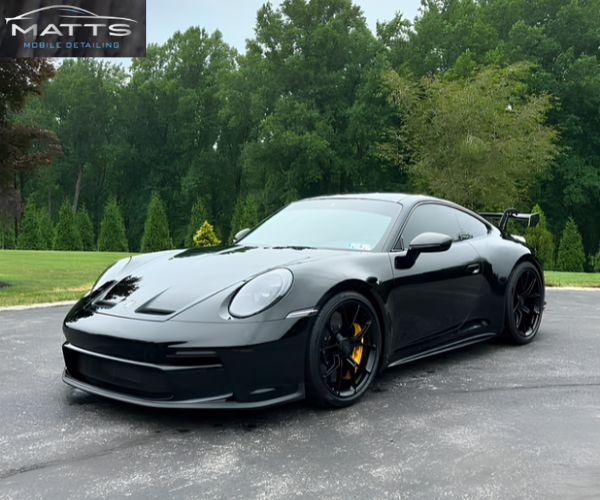
Applying Our Paint Correction Expertise to Solve This
Correcting automotive paint requires more than choosing a compound and operating a machine. A technician must assess the finish, select suitable equipment, and recognize when further polishing could cause unnecessary damage.
Matt’s Mobile Detailing provides paint correction for vehicle owners in Willow Street, PA. The team assesses the paint before determining an appropriate approach for visible swirl marks, light scratches, or dull finishes.
Experienced Technicians
The team has experience providing in Willow Street, PA paint correction for vehicles with different paint conditions. The process focuses on evaluating each vehicle’s existing finish and selecting suitable polishing techniques rather than applying the same treatment to every vehicle.
Comprehensive Detailing Services
Alongside paint correction, Matt’s Mobile Detailing offers interior and exterior detailing and ceramic coating services. Customers can discuss their vehicle’s condition and decide which detailing options suit their needs.
Convenient Mobile Service
The mobile service brings detailing to customers, subject to service location and availability. For people considering paint correction in Willow Street, this can reduce the need to travel to a traditional detailing shop and help fit vehicle care around a busy schedule.
Customer Satisfaction
Clear communication and realistic expectations are important before correction begins. The team aims to explain what the paint can achieve, identify limitations, and provide service based on the vehicle’s condition and the customer’s requirements.
How Can You Maintain Paint After Correction?
Polishing does not make automotive paint immune to future damage. Careful washing and maintenance help preserve the improved finish.
- Wash correctly. Use clean microfiber mitts and automotive shampoo.
- Avoid abrasive materials. Do not use rough sponges or contaminated towels.
- Dry gently. Use clean microfiber drying towels without excessive pressure.
- Choose paint protection. Consider wax, sealants, or ceramic coatings based on your maintenance preferences.
- Do not wipe dusty paint. Dry wiping can drag particles across the surface.
- Clean regularly. Remove accumulated dirt and contaminants with appropriate washing methods.
Owners seeking paint correction in Willow Street, PA should consider how their regular cleaning habits affect the corrected finish. Good maintenance reduces avoidable contact damage, although it cannot prevent every mark.
People Also Ask: Professional Paint Correction
Can professional paint correction completely remove swirl marks?
Many swirl marks can be removed when they are confined to the clear coat. Deeper scratches or compromised paint may limit the result.
Can paint correction remove light scratches?
Yes. Light scratches that have not penetrated beyond the clear coat can often be removed or reduced through machine polishing.
How long does paint correction take?
Timing depends on vehicle size, paint condition, preparation, and the number of polishing stages. More extensive correction generally takes longer.
Does paint correction damage the clear coat?
Correction removes a small amount of clear coat. Appropriate techniques aim to limit material removal while achieving the desired improvement.
Is one-step paint correction enough?
One-step correction can improve gloss and reduce minor swirl marks. More noticeable defects may require additional polishing stages.
Should I apply ceramic coating after correction?
Ceramic coating can add water repellency and make routine cleaning easier. It does not make paint scratch-proof, and proper surface preparation is important.
How often should I get paint corrected?
Correction should be performed only when necessary because it removes some clear coat. Proper washing and maintenance can reduce the need for repeat polishing.
Restore Your Vehicle’s Finish with Matt’s Mobile Detailing
Matt’s Mobile Detailing combines experienced technicians, additional detailing services, and convenient mobile appointments. The team assesses each vehicle and recommends an approach based on its condition rather than promising results that the paint cannot safely achieve.
Contact us to learn about paint correction, request a quote, and schedule an appointment. Get clear advice about your vehicle’s finish and the correction options available.